Choosing a firm hospital bed mattress helps support proper alignment, reduce skin breakdown, and maintain comfort for extended periods in medical or home-care settings. The following five mattresses are selected for their firm support characteristics, durable construction, and reliable pressure redistribution features. Each product is linked to its Amazon page for quick reference, with an emphasis on density, cover quality, and overall support. Read on to compare firmness, materials, and maintenance considerations to find the right option for durable, long-term use.
| Product | Brand | Firmness / Support | Notable Benefit |
|---|---|---|---|
| Invacare Fortress Shaped-Cell Mattress | Invacare | Balanced firmness with fortress-shaped cells for targeted relief | Full anti-slip cover for secure placement |
| Armonyo Medium Firm Hospital Mattress | ARMONYO | Medium firm; dual-layer high-density foam | 70D waterproof cover; supports up to 450 lbs |
| Medacure Pressure Redistribution Foam Mattress | Medacure | Memory-foam-based redistribution with higher-density base layers | Three-layer design for surface support and airflow |
| ProHeal Gel-Infused Memory Foam Mattress | ProHeal | Firm support with gel-infused comfort; pressure redistribution | Sloped heel design to reduce pressure in vulnerable areas |
| VEVOR Dual-Layer Hospital Mattress | VEVOR | High-density dual-layer with gel-infused top for comfort and support | Waterproof, stain-resistant cover; easy to clean |
Invacare Fortress Shaped-Cell Mattress

The Invacare Fortress Shaped-Cell Mattress is designed for long-term care settings requiring reliable pressure redistribution. The mattress uses five fortress-shaped cells to distribute weight and reduce skin stress, helping to mitigate the risk of pressure injuries during extended use. A fluid-resistant removable cover supports infection control while enabling straightforward cleaning. The full anti-slip bottom helps keep the mattress securely in place on most hospital bed frames, minimizing shifts during transfers or repositioning. This model emphasizes stability and targeted relief, making it suitable for patients who spend long hours in bed.
The mattress construction focuses on stability and edge-to-edge support, helping caregivers manage patient comfort across different positions. The cells promote air flow to improve cooling and reduce heat buildup in sensitive areas. Its USA-made origin adds an element of durability and standardization often sought in clinical environments. While not marketed as ultra-firm, the combination of fortress cells and firm overall base supports consistent alignment and reduces motion-related disturbance for patients who require steady support throughout the day and night.
Armonyo Medium Firm Hospital Mattress

Armonyo’s hospital mattress emphasizes a medium-firm feel achieved through a premium dual-layer foam system. The base layer provides a solid, long-lasting foundation while the top layer adds supportive contouring to reduce high-pressure points. A 70D waterproof cover helps resist spills and stains, supporting easy cleaning and longevity in busy care settings. With a stated 450 lb weight capacity, this mattress accommodates a broad range of patients without sacrificing support or stability. The combination of high-density base foam and a breathable top layer translates to dependable support across the bed surface.
In terms of comfort and care, the mattress is designed to maintain its shape under prolonged use, reducing sagging and bottoming-out risks. The dual-layer configuration targets deep tissue support, particularly at the hips and shoulders, while still offering a surface that molds to body contours when needed. The cover’s durability and the non-skid bottom minimize movement at the mattress-bedding interface, which can aid caregivers during repositioning and daily hygiene procedures. This model is a practical pick when firm support is a priority with reliable durability for long-term care environments.
Medacure Pressure Redistribution Foam Mattress
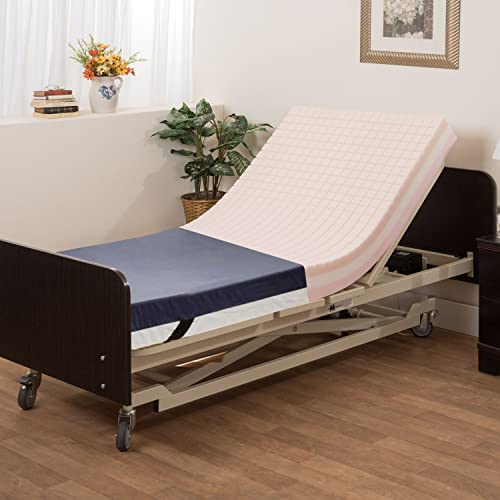
Medacure’s pressure redistribution mattress uses a three-layer design with a viscoelastic memory foam surface intended to distribute weight and reduce peak pressures. The layered approach enhances support along the head, torso, and legs, promoting a more even distribution of body weight. The memory-foam component helps conform to shape while minimizing excessive heat buildup when paired with the right airflow and ventilation. While the description emphasizes comfort and protection against pressure ulcers, the product also aims to maintain structural integrity across typical hospital bed dimensions, making it suitable for longer hospital stays or home-care routines.
Key attributes include its hospital-grade nylon cover, designed to be durable and easy to clean, which is important for infection control protocols in clinical settings. The foam’s density is chosen to balance firmness and conforming support, ensuring that patients receive stable support without creating uncomfortable pressure points. For caregivers, a mattress like Medacure offers predictable performance in daily positioning and turning, supporting consistent patient care through extended periods.
ProHeal Gel-Infused Memory Foam Mattress

ProHeal’s memory foam mattress combines a gel-infused memory foam layer with an underlying support system designed for pressure redistribution and breathability. The gel infusion helps dissipate heat, which can be a factor in long-term comfort for patients who remain in bed for extended periods. The mattress is described as providing a firm yet comfortable surface with an incline to help reduce heel pressure, a common concern in bed-bound patients. This design aims to balance firmness with contouring, ensuring stable alignment while allowing the body to settle into a supportive position during rest or sleep.
In addition to comfort, the ProHeal model emphasizes a breathable surface with a flexible heel slope that assists in distributing pressure away from the heel area. The included fluid-resistant nylon cover contributes to infection-control practices by reducing moisture buildup and simplifying cleaning. This mattress is suitable for home care and clinical environments where improving patient comfort without sacrificing support is essential, particularly for patients at risk of pressure injuries or mobility limitations.
VEVOR Dual-Layer Hospital Mattress

VEVOR offers a dual-layer hospital mattress featuring high-density foams with a gel-infused top layer, designed to deliver even pressure distribution and responsive support. The dual-layer construction targets both immediate comfort and long-term structure, helping to minimize pressure points during extended lying periods. A waterproof, stain-resistant cover further enhances durability and sanitation, with a bottom zipper allowing for straightforward cover replacement or cleaning. This model emphasizes a balance of firmness through dense foam while incorporating a softer surface top to improve patient comfort and reduce heat buildup.
Care considerations include the cover’s ability to resist spills and stains, which is important for staying within hygiene guidelines in hospitals or home-care settings. The mattress’s weight capacity and dimensions align well with standard hospital bed frames, offering compatibility with typical equipment used in patient care. Caregivers may appreciate the ease of maintenance and the mattress’s resilience under daily use, especially for patients who require reliable pressure redistribution and steady support.
Buying Guide
Firmness And Support
Firmness is influenced by foam density, core construction, and the presence of support layers. Look for high-density base foams (1.8–2.3 lb/ft³ or higher) and a well-designed top layer that provides contouring without excessive sag. For patients who require sustained pressure relief without sacrificing alignment, a medium-to-firm profile is often ideal. Check product descriptions for density figures and notes on “firm,” “medium-firm,” or “dual-layer” configurations to gauge expected support.
Pressure Redistribution
Effective pressure redistribution distributes load across the body to reduce concentrated pressure points. This can be achieved with laminated foam, memory foam, gel-infused foams, or multi-layer designs with specific cell structures. Consider whether the mattress has a dedicated redistribution layer and how it performs for high-risk patients, as this directly impacts the risk of pressure injuries over time.
Cover Material And Cleanability
Hospital-grade covers often use water-resistant or waterproof fabrics (e.g., 70D nylon, TPU-coated surfaces) to resist spills and fluids. Removable, washable covers simplify sanitation protocols, a key factor in clinical settings and home-care environments. Non-slip bottoms help keep the mattress in place, reducing movement during transfers and repositioning.
Size, Weight Capacity, And Bed Compatibility
Bed sizes vary (commonly 80″ x 36″ for standard hospital beds, with some models at 34″ x 76″). Weight capacities range from 300–500 lbs, or more for specialized models. Confirm compatibility with your bed frame and ensure the mattress dimensions match the bed to prevent gaps or misalignment that could affect safety and comfort.
Durability And Maintenance
Durability hinges on foam density, cover resilience, seams, and the integrity of the anti-slip bottom. A removable cover aids routine cleaning, while a robust edge and core support prevent premature sagging. Be mindful of warranty terms, as higher-density foams typically last longer under repeated use and repositioning.
Clinical And Home-Care Considerations
For clinical settings, choose mattresses with proven pressure redistribution capabilities and easy-clean surfaces that withstand frequent disinfection. For home care, prioritize ease of handling, weight capacity, and compatibility with adjustable beds. In both contexts, consider patient-specific needs such as heel elevation, limb positioning, and the risk profile for pressure injuries when selecting firmness and layering.