Choosing the right mattress to pair with a sleeping bag can dramatically improve sleep during camping, backpacking, or road trips. A quality sleeping pad or foam mattress provides insulation from cold ground, cushions joints, and prevents pressure points that wake you at night. This guide highlights five top options designed to work well with sleeping bags, focusing on comfort, durability, portability, and safety. Each pick balances support with compact packing, so you can rest easy on any outdoor adventure.
| Product | Brand | Notable Feature | Approximate Thickness |
|---|---|---|---|
| CYMULA CertiPUR-US Memory Foam Camping Mattress Pad | CYMULA | High-density memory foam; CertiPUR-US certified | Not specified |
| Gaialoop Thick Memory Foam Camping Mattress Sleeping Pad | Gaialoop | 30D foam + 40D memory foam; OEKO-TEX certified | 3″ (approximate core) |
| Pretyw Double Sleeping Pad for Camping | Pretyw | 4″ thick; built-in pillow; built-in foot pump | 4 inches |
| ZOOOBELIVES Extra Thickness Inflatable Sleeping Pad | ZOOOBELIVES | 4″ thick; built-in pump; 4-season R-value | 4 inches |
| Kingfun Memory Foam Camping Sleeping Pad | Kingfun | 3″ thick; 1″ gel-infused memory foam + 2″ high-density foam | 3 inches |
Introduction to the selections: The five picks combine memory foam comfort, durable fabric, and practical features like built-in pumps or washable covers. Each option aims to improve sleeping bag performance by enhancing warmth, stability, and ease of transport. When choosing, consider insulation (R-value), thickness, pack size, and whether you prefer foam or air-based pads. The following sections provide detailed product insights to help you select the best mattress for your sleeping bag and camping style.
CYMULA Memory Foam Camping Mattress Pad

The CYMULA camping mattress pad uses high-density memory foam that adapts to body shape and weight, delivering superior comfort and shock absorption for sleeping bag users on uneven ground. The pad emphasizes a soft, cozy feel while still providing support, helping campers avoid the common issues of sinking or discomfort that can come with firmer ground. This model prioritizes a lightweight, roll-up design suitable for car trips, tents, and guest-sleepover scenarios, making it versatile for various camping setups.
Safety and eco-conscious design are highlighted by CertiPUR-US certification, ensuring the foam materials are tested for emissions and chemical content. The pad is described to reduce environmental impact relative to traditional foam, aligning with outdoor enthusiasts who value responsible gear. The bottom surface is non-slip and waterproof, helping the pad stay in place on slippery or damp terrain, which is especially helpful when sleeping on ground near a tent or car.
In practice, this pad pairs well with a sleeping bag that benefits from a cushioned base and a stable surface. Its roll-up feature and included storage bag streamline packing, while the accompanying straps help secure the pad during transit. For campers prioritizing comfort and safety in a single, portable solution, the CYMULA pad offers a compelling balance of foam support and practical convenience.
Gaialoop Thick Memory Foam Camping Mattress Sleeping Pad

Gaialoop’s pad combines a 30D support foam layer with 40D memory foam to create a robust, memory-foam-based sleeping surface. This combination aims to reduce pressure points and deliver a soft yet supportive feel, which can complement a sleeping bag by improving body alignment and heat retention. The product is OEKO-TEX certified, signaling attention to safe materials and minimal emissions, a consideration for sensitive sleepers or those who camp in tight, closed spaces like a tent interior.
The pad features a velvet-like removable cover and a waterproof inner surface to guard the foam from moisture and ground moisture. Reusable and washable covers simplify maintenance while the pad’s water-resistant design broadens its suitability for damp campsites, dew-soaked mornings, or wet grass. Its soft outer fabric enhances comfort under a sleeping bag’s liner, making it a reliable all-around option for a variety of camping climates.
For sleeping bag users seeking a foam-based base with robust insulation and a gentle feel, Gaialoop offers a thoughtful mix of comfort, safety certifications, and practical maintenance. The two-layer foam structure supports comfort across different sleeping positions, whether you’re a back sleeper, side sleeper, or stomach sleeper under a sleeping bag.
Pretyw Double Sleeping Pad for Camping

The Pretyw double sleeping pad is designed for two campers, with a generous 79×55 inch footprint and a 4-inch thickness. The built-in pillow and integrated foot pump offer convenience, enabling quick setup without extra gear. The dual-layer valve system on the pillow reduces air leakage and accelerates deflation, aiding rapid packing after a night outdoors. This pad stands out for its all-in-one approach—sleeping surface, head support, and inflation mechanics—catering to couples or campers who want a simple, single-item solution.
Materials include a rugged 40D nylonConstruction with a multi-layer TPU design to guard against wear and tear. The waterproof exterior helps resist moisture and ground dampness, while the ergonomic wave pattern supports different sleeping positions—back, side, and stomach—without sacrificing stability. For sleeping bag enthusiasts who share a tent or want extra space, this option provides a comfortable, portable base for nights on uneven or rocky terrain.
Keep in mind that the pad’s bulkier footprint may affect packing efficiency for ultra-light backpackers, but for car campers or family trips, the Pretyw model delivers reliability, comfort, and value in a single package.
ZOOOBELIVES Extra Thickness Inflatable Sleeping Pad
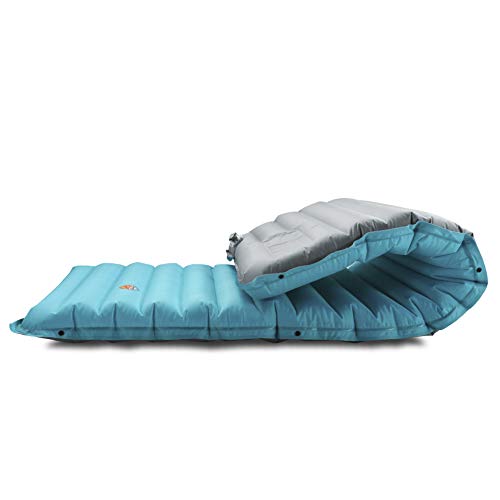
The ZOOOBELIVES sleeping pad emphasizes a true four-season experience with a thick 4-inch profile, designed to keep users insulated from cold ground. Its built-in pump simplifies inflation, and the double-decked valve system supports precise inflation and quick deflation. The exterior fabric is a 75D polyester pongee with PVC lamination, delivering durability and weather resistance suitable for diverse outdoor conditions, including damp or damp ground, mud, and wet tents.
With an estimated R-value around 4, this pad aims to balance warmth with portability for winter or shoulder-season camping. Its dimensions—approximately 74 by 24.4 inches—offer ample sleeping space for single sleepers, hikers who value warmth, and campers who prefer a compact pad that still delivers significant cushion and insulation. The built-in pump reduces the need for separate inflating gear and encourages faster setup after a long day outdoors.
For sleeping bag users prioritizing warmth and rugged durability, ZOOOBELIVES provides a robust option that stands up to rough terrain while preserving comfortable rest in varied environments.
Kingfun Memory Foam Camping Sleeping Pad

The Kingfun pad combines a 3-inch thickness with a foam architecture designed for stability and comfort. It uses an inner 1″ gel-infused memory foam layer plus 2″ high-density support foam to create a medium-firm feel that resists flattening over time. This structure helps maintain shape and support, which is valuable when sleeping bag insulation and surface firmness combine to influence sleep quality. The TPU-coated interior offers protection from moisture while the removable cover aids in cleaning and maintenance.
Eight Velcro connectors in the corners enable easy customization, enabling campers to join multiple pads for extended sleeping space or to secure a pad to a larger base layer. The included travel bag assists with transport, making it a practical choice for car campers, guest setups, or families traveling with multiple sleeping arrangements. For sleepers who want a balance of gel-infused comfort and sturdy support, this Kingfun option provides a compelling mix of features.
In summary, each of these five options offers distinct advantages for pairing with a sleeping bag, from the foam-focused comfort of CYMULA and Gaialoop to the air-pad versatility of ZOOOBELIVES and Pretyw, and the hybrid support of Kingfun. Your best choice depends on whether you value heat insulation, built-in pumps, pack size, or level of firmness.
Buying Guide
Key purchase considerations
- Insulation and R-value: If you camp in colder conditions, select pads with higher insulation values to reduce heat loss through the ground.
- Thickness and comfort: Thicker pads offer more cushion but may require more storage space. Balance comfort with packability for your camping style.
- Material and safety: Look for CertiPUR-US or OEKO-TEX certifications when choosing foam pads, indicating safer materials and lower emissions.
- Portability and setup: Pads with built-in pumps, quick-deflate valves, or carrying bags simplify setup and packing, ideal for hikers or family trips.
- Waterproofing and durability: Waterproof surfaces and durable outer fabrics extend pad life in damp campsites and rough terrain.
- Compatibility with sleeping bags: A pad should complement your sleeping bag’s insulation and fit well within your tent or vehicle bed to maximize warmth and stability.
Foam vs. inflatable considerations
Foam-based pads (memory foam cores) tend to be heavier but offer stable support and may provide longer-lasting comfort, particularly for static campsites. Inflatable pads are lighter and compress into small packs, making them ideal for backpacking or space-limited trips. Some models pair both concepts, incorporating memory foam layers with an inflatable base to combine comfort and portability.
Maintenance and care
Most pads benefit from a removable, washable cover or a wipe-down routine to keep surfaces clean. For inflatable pads, avoid over-inflation to minimize seam stress and valve wear. Always follow manufacturer care instructions for cleaning and storage to extend lifespan.
Performance across camping styles
Car campers may prioritize pad thickness and warmth to maximize comfort in a stationary vehicle or tent. Backpackers may value compact size and weight, looking for thinner, lighter pads with quick inflation. Families seeking shared sleeping solutions may choose larger pads with dual chambers or multiple sleeping zones to accommodate two people or kids.
In summary, the best mattress for a sleeping bag depends on your camping style, climate, and packing approach. The five options highlighted here provide a spectrum of foam and inflatable designs, emphasizing safety, insulation, comfort, and convenience to help you rest well wherever your adventures take you.