Choosing a rotating or pressure-redistribution mattress for a hospital bed can reduce the risk of skin injuries and improve patient comfort during extended stays. This guide reviews five top mattresses and pads designed for standard hospital beds, focusing on how they redistribute pressure, materials, cleaning needs, and durability. The selections below balance support, maintenance ease, and safety. Use the Buying Guide to compare features such as weight capacity, cover design, and suitability for high-risk patients.
| Product | Brand | Type | Key Benefit |
|---|---|---|---|
| Invacare Softform Premier 36×80 | Invacare | Foam Mattress | Two-layer U-core; high-density foam; 500 lb capacity |
| Invacare Fortress-Cell Mattress | Invacare | Foam with Fortress Cells | Five Fortress-shaped cells for targeted relief |
| Medacure 3-Layer Redistribution Mattress | Medacure | Foam/Memory Foam | Visco elastic memory foam; six sizes |
| Vive Alternating Air Mattress Pad | Vive | Alternating Air Pad | 130 air cells; whisper-quiet pump; pressure relief |
| ProHeal Pressure Redistribution Mattress | ProHeal | Foam/Memory Die-Cut | Multi-tiered foam; heel relief; washable cover |
Invacare Softform Premier 36×80 Mattress
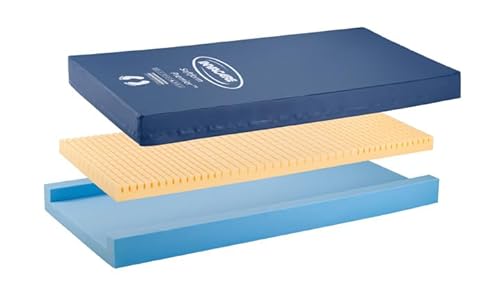
The Invacare Softform Premier combines two independent layers with a unique single-piece U-core and a contoured foam insert. This design promotes deep patient immersion and effective pressure redistribution, supporting patients up to very high risk. A three-zone construction directs appropriate support to the head, midsection, and feet, while high-density foam on both layers improves durability and edge stability. The mattress offers substantial load handling (up to 500 lb) and is tailored for hospital bed use, delivering reliable comfort and consistent pressure relief across the sleeping surface.
Invacare Fortress-Cell Pressure Mattress

This Invacare model emphasizes five Fortress-shaped cells designed to reduce skin stress, improve air flow, and provide targeted pressure relief during extended use. The fluid-resistant, easy-clean cover is medical-grade, latex-free, and features a flat concealed zipper with durable seams for everyday care. A full anti-slip design ensures the mattress stays securely in place on most hospital bed frames, improving safety and stability during patient transfers and repositioning.
Medacure 3-Layer Redistribution Mattress
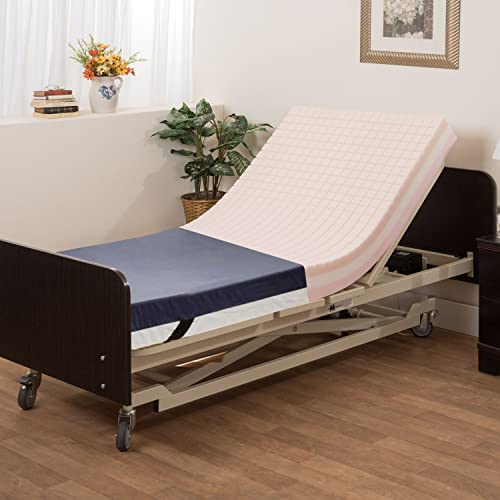
Medacure’s pressure redistribution mattress uses three layers of layered foam to distribute weight evenly and mitigate pressure ulcers. A convoluted foam cut design provides enhanced support while promoting airflow to reduce heat and moisture. Available in multiple sizes, this mattress accommodates a range of patient heights and bed configurations, including wider versions for bariatric needs and longer options for taller patients. The combination of memory-foam-like feel and open-cell ventilation aims to balance comfort with effective pressure relief over extended periods.
Vive Alternating Air Pressure Mattress Pad

Vive’s alternating air pressure mattress pad is designed to relieve bed sores and ulcers through 130 individual air cells. The proprietary cycle alternates inflations to distribute weight evenly, providing rapid pressure relief. A whisper-quiet pump with a customizable control scheme supports a near-silent operation, and each cycle runs about six minutes—offering a practical, unobtrusive solution for home or clinical settings where constant repositioning isn’t feasible.
Vive Alternating Air Pressure Mattress For Hospital & Home Beds

This model emphasizes quiet operation and adjustable airflow to prevent bed sores for bedridden patients. The system evenly distributes weight and reduces pressure points, with a straightforward pressure dial to tailor firmness levels. It’s designed for both hospital and home environments, making it a versatile choice when a dedicated hospital-grade bed is not available. The emphasis on consistent, low-noise performance supports restful sleep and easier night-time care for caregivers and patients alike.
ProHeal Pressure Redistribution Mattress

ProHeal’s pressure redistribution mattress combines multi-tiered die-cut foam with memory-foam elements and a heel-relief design to address common pressure zones. The removable, nylon surface topper is vapour-permeable and waterproof, while the bottom layer uses triple laminate vinyl for enhanced fluid resistance and fire retardancy. This configuration aims to balance cooling, support, and durability while providing easy cleaning and ongoing maintenance for busy care environments.
Buying Guide
Key purchase considerations help match a mattress or pad to patient needs and bed setups. Start with bed size compatibility; many hospital beds use standard 36″ x 80″ mattresses, but exact dimensions and frame reinforcement can vary.
- Pressure redistribution approach: Foam-based systems excel at contouring and edge support, while alternating air pads provide dynamic weight distribution. Consider the patient’s risk level for ulcers and comfort preferences.
- Material and cover: Fluid-resistant, washable covers simplify cleaning. Look for latex-free materials if sensitivities exist and for temperature-management features to reduce moisture buildup.
- Durability and load capacity: Higher weight limits and robust foam cores improve longevity in high-use environments and with heavier patients.
- Maintenance needs: Removable toppers and anti-slip bottoms reduce shifting and simplify cleaning, shifting maintenance from daily tasks to routine care.
- Power and noise: Alternating air systems require power and a pump; choose models with quiet operation to minimize disturbance for the patient and caregivers.
- Hygiene and safety: Look for easy-access zipper designs, seam integrity, and edge support for safe patient handling and transfer.
- Cost and availability: While not a price-focused guide, consider long-term value, replacement parts, and warranty coverage when evaluating options.
Choosing the right rotating or pressure-redistribution mattress involves balancing risk, bed size, cleaning requirements, and caregiver practicality. The reviewed options offer a spectrum of features—from high-density foam cores and multi-zone support to advanced alternating-air systems—designed to help mitigate pressure injuries while maintaining comfort and care efficiency.